
The Honest Deceiver
Why I gave up the Cube, how I embrace my personality, & ESP secrets unlocked

Hi! If we haven’t met, my name is Jeff Kowalk, and I’m the creator of Erudite Magic. This is my newsletter, The Erudite Magic Digest, and my goal is to provide you with perspectives and editorials on magic-related subjects that I can’t really address in my videos.
Today’s issue has a theme of “intellectual honesty” in an art that seems to be anything but honest. We’ll talk about not using routines that won’t work, but also how we should be embracing who we are to share that with an audience. Finally, I’ve got some sources to help you with your next ESP trick, courtesy of Vanishing Inc. Enjoy the newsletter, and keep reading!
Why I Don’t Use a Rubik’s Cube
Of all the toys or items that magic has incorporated, I feel like the Rubik’s Cube is up there as one that I should use, and yet I don’t. Why? My answer has everything to do with intellectual honesty…
You see, I can’t solve a cube. There, I said it. I don’t necessarily feel any better, but it’s nevertheless the truth and the entire reason why I don’t work the cube into my act despite the plethora of self-working miracles available with the prop. I believe that if I’m making claims about real skills (memory work, poker cheating skills, etc.), I ought to be able to actually do them, even if I choose a “fake” demonstration for my shows. Otherwise, one runs the very real risk that you’ll be caught or called out at some point. This risk is accentuated with the most ubiquitous toy on Earth.
At some point working with a Rubik’s Cube, you’ll actually need to be able to get it to a solved state. And if you can’t do that in real life, you’re going to have a big problem. And even if that moment never comes, the audience can feel your real skill and familiarity with your props. In short, they’ll know if you’re lying…
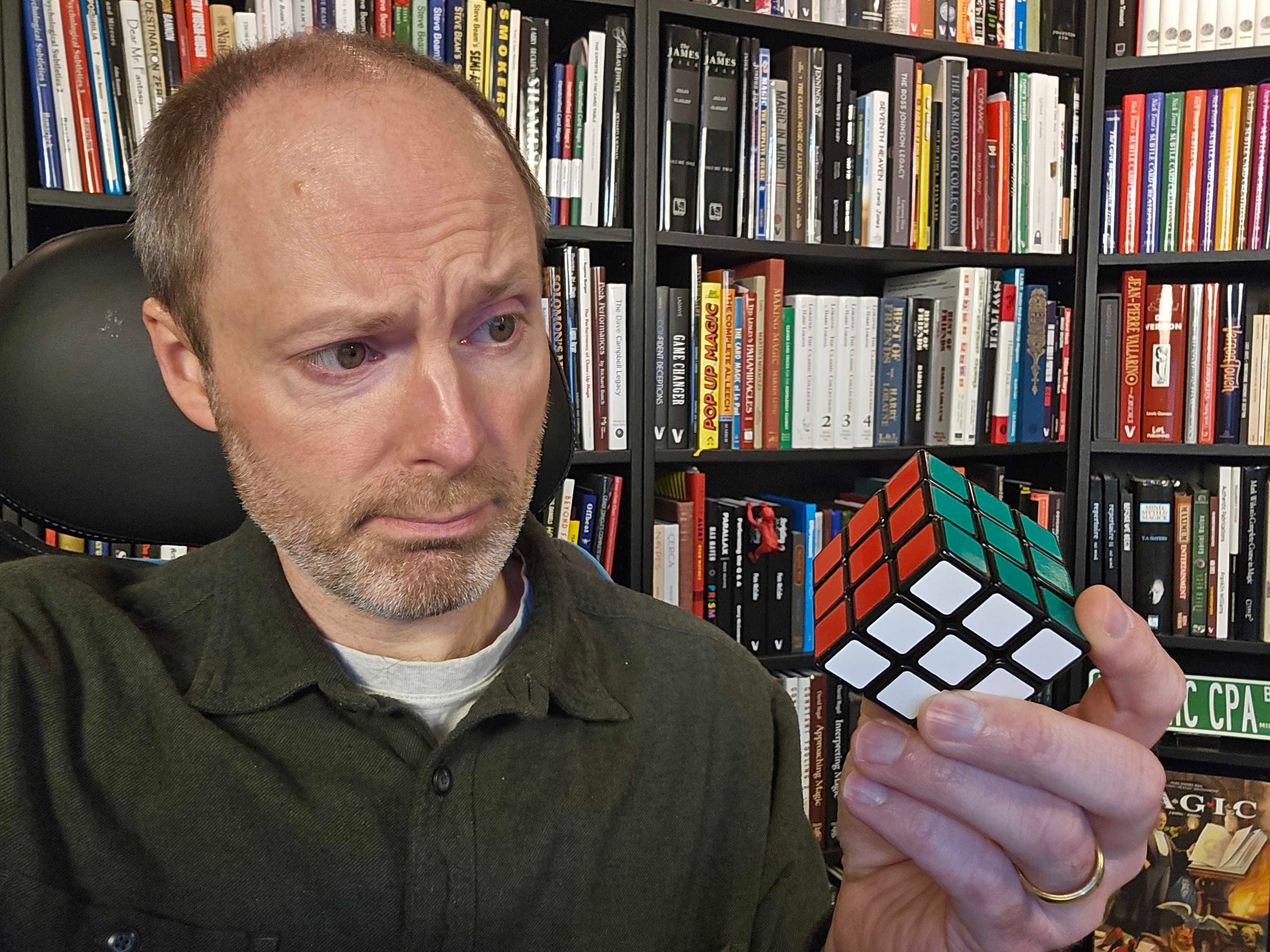
I know there are plenty of methods for cube magic that don’t require you to actually know how to solve it, but that just makes it even more dangerous. If anything goes wrong, you’ll be up the proverbial creek without a paddle.
But it’s not just cube magic that I avoid; earlier I mentioned memory demonstrations. While I have a reasonably serviceable recall, I can’t imagine doing a routine that supposedly demonstrates my mental acuity only to forget someone’s name later in the show. You get the picture.
What props or routines have you avoided in the past (or even now) that fits this same criteria? What types of tricks are intellectually dishonest for you and your performance persona? Or do you disagree with me entirely? Let me hear your take!
To Thine Own Self Be True
There’s another form of “intellectual dishonesty” that I actively try to avoid and want to warn you against, too. Only this version is even more insidious than choosing to perform certain types of effects. In fact, it’s the opposite of that problem.
I’m talking about the risk of not embracing and sharing your true self with an audience. This can take a lot of forms, but perhaps the most common is never having the courage to develop something of your own (good or bad!) to share with others. I don’t mean coming up with an original effect with its own unique method as much as I mean developing your own script for a magical effect - one that ties in with your character and interests.
At the end of the day, we have to ask ourselves, “Does the audience find me interesting, or do they assume that anyone could do just as well if they merely subscribed to a magic retail site’s sales list?” I hope you believe the former, but as Henry Ford famously said, no matter what you believe, “you’re right.” I hope you believe, as I do, that magic is a part of who I am as an individual - an important part to be sure - but just a portion of who I am. It gives me the forum to share myself with an audience, but there’s more to me than just regurgitating a trick I bought online a week ago.
But it’s not just our tricks and scripts, it’s also our costume and world-building. I’ve railed on it before, but I’m never quite sure why so many magicians insist on wearing all black…it seems to reinforce the stereotype that magicians don’t have personalities. Instead, embrace everything that a well-considered costume could offer. We’re trying to build fantasy worlds where we can invite our audiences to forget the real world and partake in ours for a brief moment, and what we wear can quickly convey an important facet of that construct, so don’t take it for granted.
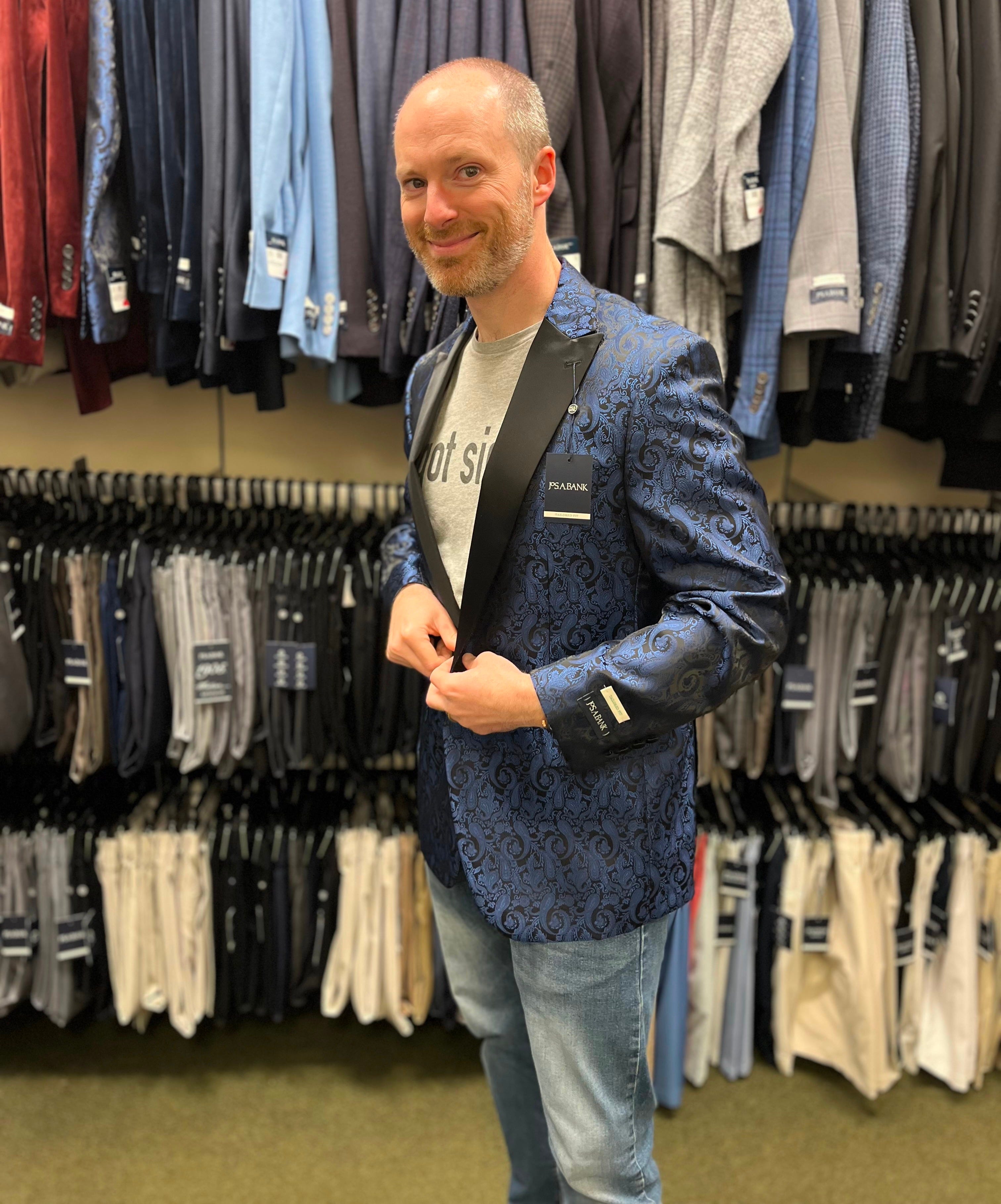
The real question, it seems to me, is whether we will have the courage to make ourselves vulnerable to a group of friends or strangers, letting them choose whether they like what we share with them from our own personal inner struggles and triumphs. Where do you think you are on that journey toward boldness for expressing who you are and who you want to be?
I don’t want you to think I’ve somehow “arrived.” On the contrary, I’m definitely still in the process of self-discovery and self-revelation. They’re two sides of the same coin, but both will require slightly different work. More to come on that in the near future.
The following portion of The Erudite Magic Digest is a list of tricks using ESP decks. I normally reserve research for paid subscribers, but thanks to Vanishing Inc., this time it’s available to everyone to celebrate the launch of the AF ESP Deck. So enjoy, and thanks to Vanishing Inc. for making this free to all!
ESPecially Good ESP Routines
Speaking of embracing a specific character and aesthetic, the team at Vanishing Inc. recently asked me to dive into the archives to find routines that fit a very specific, vintage vibe...
As the resident “book guy” on the VI team, I’m sometimes asked how to make classic effects feel fresh. The answer in this case is from the 1930s. With the release of the AF ESP Deck, VI isn't just releasing a modernization of a tool; they’re reviving an era where “extra-sensory perception” was a believable, captivating premise.
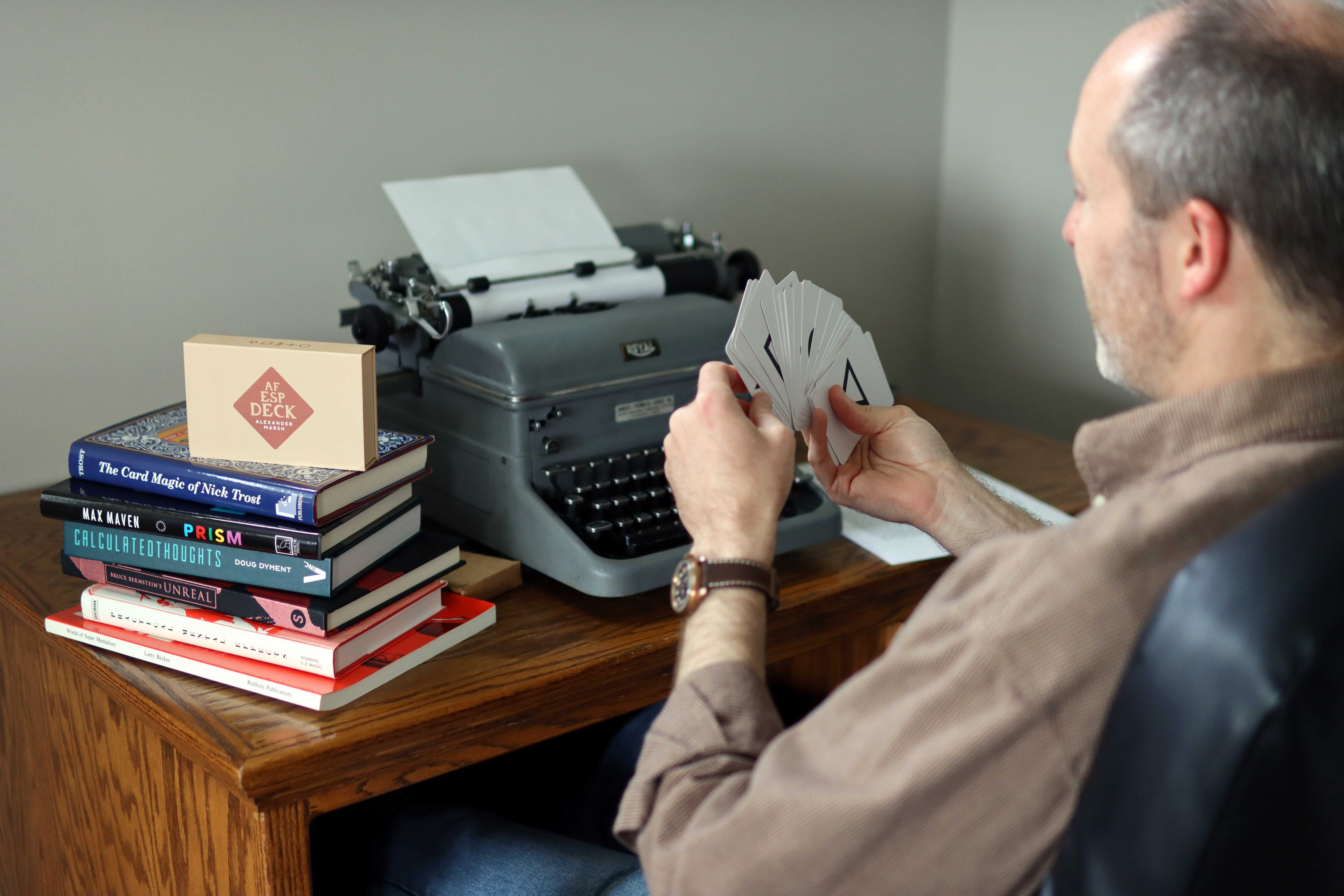
The standard 25 card “Zener deck” (so named because of its creator, psychologist Karl Zener) entered the zeitgeist in the 1930s and was quickly adopted by magicians and mentalists alike who wanted to spice up their acts with demonstrations of “extra-sensory perception.” Once the community got ahold of these cards, their creativity exploded into hundreds of fooling effects. The best part about these tricks? What’s old is new again. It’s been almost 100 years since these cards were introduced to popular culture, which means that they’re now “vintage” with their own history and stories to tell an audience.
Below, I’m going to share a list of ESP tricks from magic literature that I think deserve your attention. But before I do, I want to return to the phrase “extra-sensory perception,” because it’s an important distinction from straight “mind reading.” Using ESP cards is something all magicians can pull off, because it taps into a more believable premise: that humans have an intuitive sense. This isn’t some sort of mystical woo-woo, it’s an untapped ability that all of us have and can use if we learn to listen to its quiet impulses. So even if you’re not a “mentalist,” I believe there’s a fantastic edge to presenting tricks with an ESP deck.
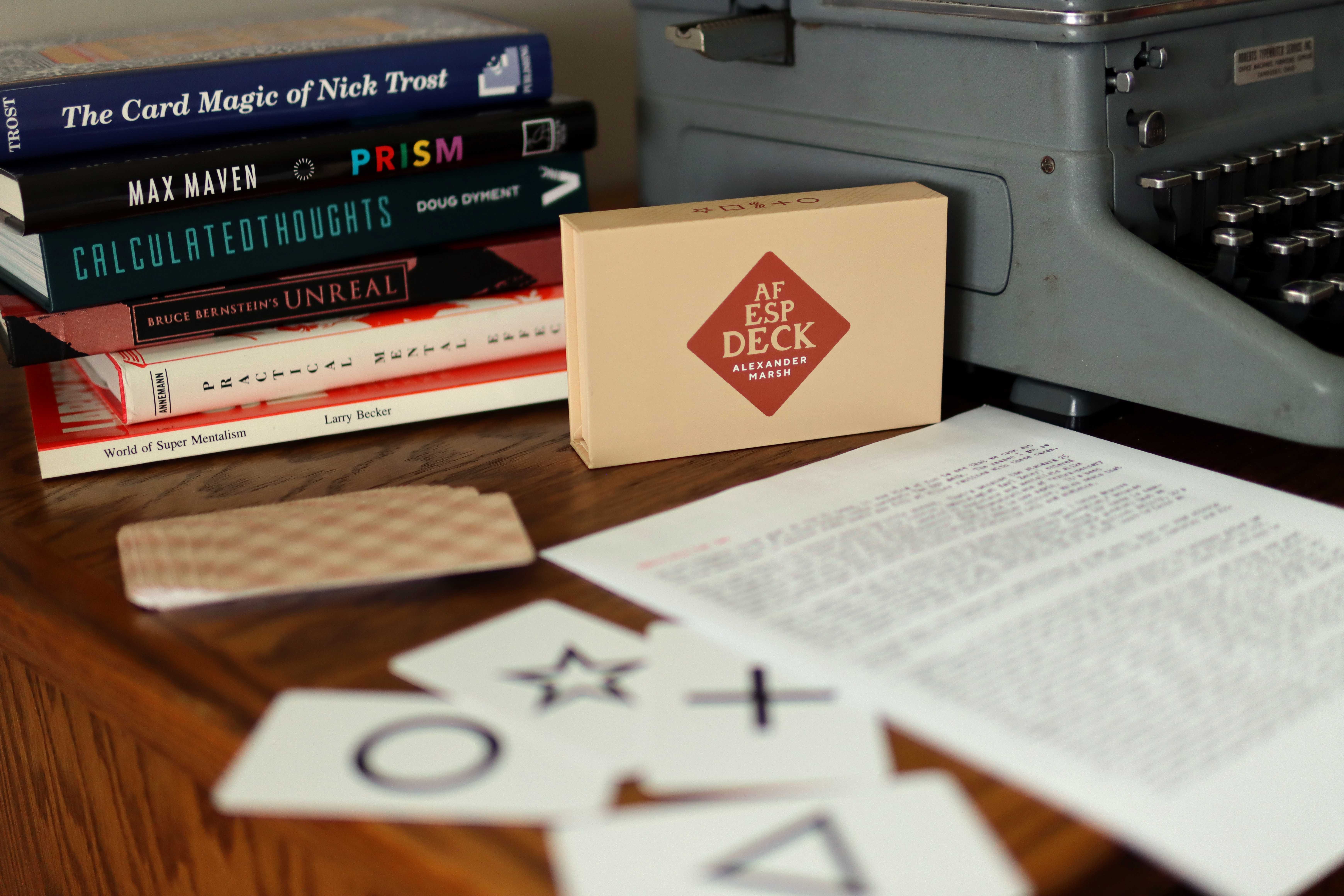
To help you put this vintage aesthetic to work, here are some choice routines from magic literature that truly sing with a vintage ESP deck. I’ve arranged them to help you find a piece that will work for your character and situation:
Best for Close-up
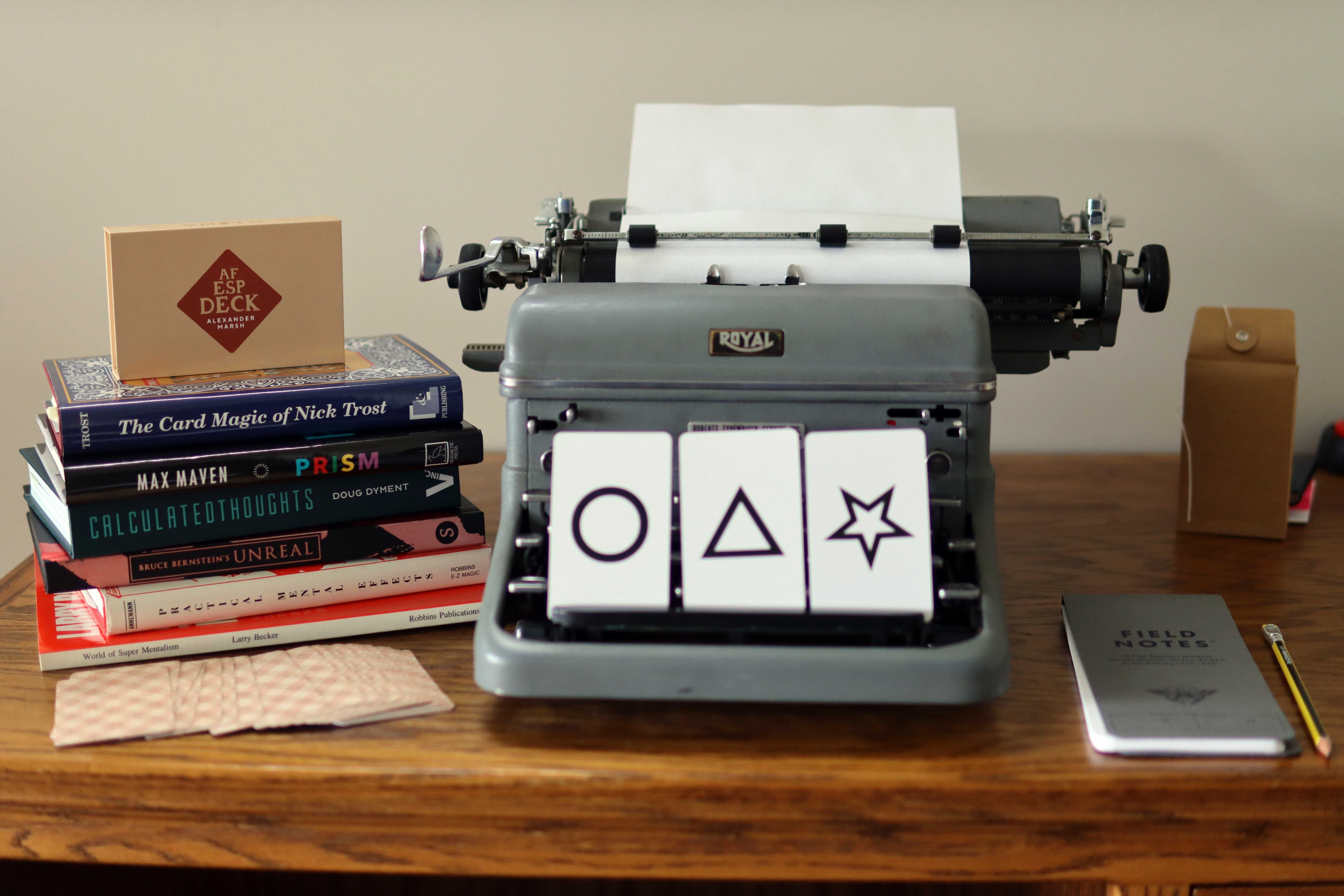
YGGDRASIL - First introduced by Ted Annemann in 1938, this beautiful multi-phase routine is the gold standard for ESP card magic. While the original write-up calls for two decks, the clever performer can adapt the concepts into a one-deck miracle. I love this because it isn't just a trick; it’s a three-part psychological journey that builds while establishing the performer’s credibility from the first phase. You can find it in Practical Mental Magic or The Jinx, take your pick!
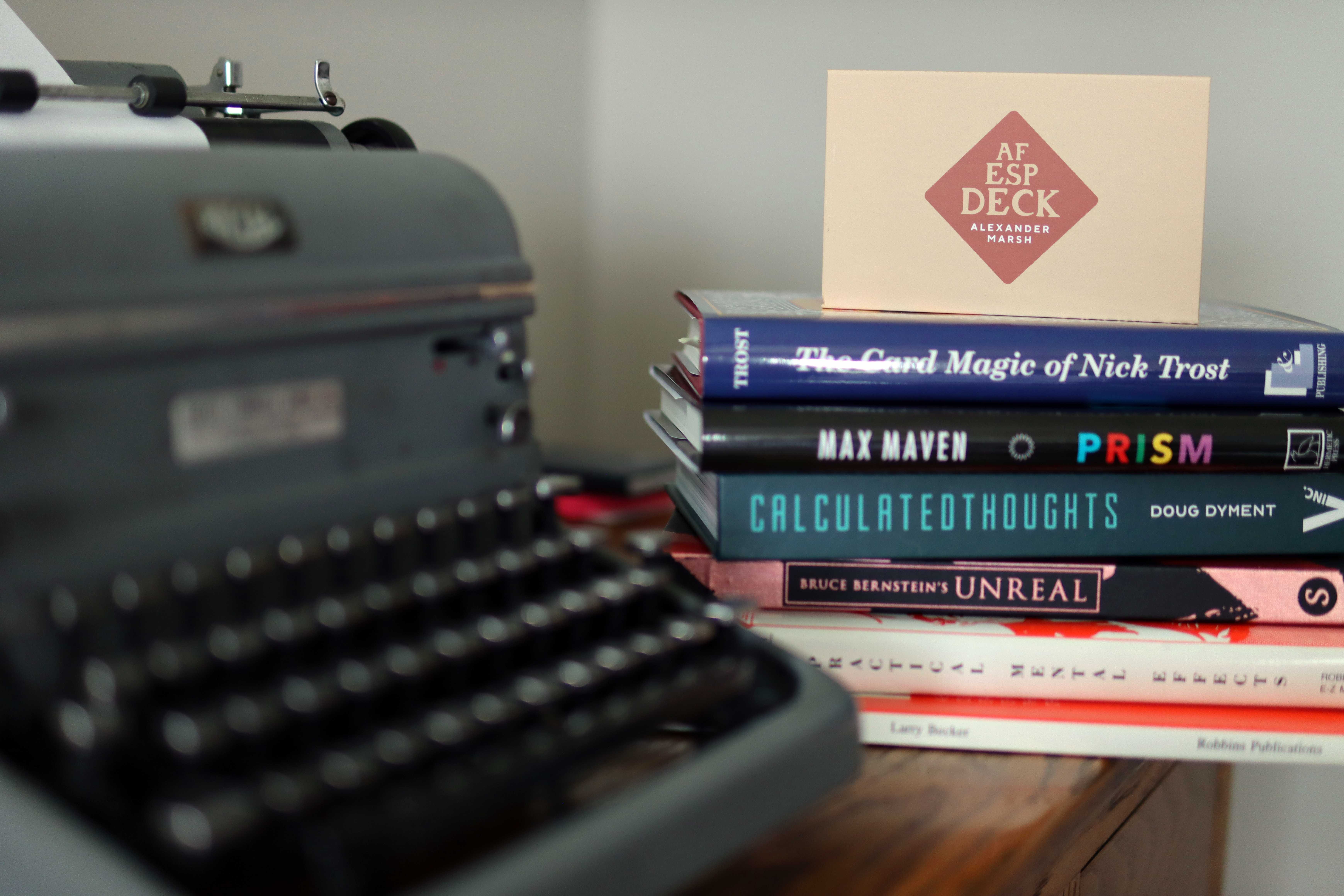
The Third Dimension - If you ask any veteran ESP practitioner for a recommendation, the name Nick Trost will invariably come up as a prodigious creator of such effects. Found in The Card Magic of Nick Trost, “The Third Dimension” is an ultra clean, ready-to-go test of a participant's intuition. It’s technically effortless, allowing you to focus entirely on the presentation. Because the AF ESP Deck contains markings within the vintage back design, the “fairness” of this routine is amplified since you can perform it face down instead of face up!
NOTE: Nick’s 9 book series, Subtle Card Creations also share a ton of these ESP routines, so I invite the curious student to dig into them as well!Burnt Offerings - Max Maven was not only prolific, but also brilliant, and this ESP effect (from Prism, p. 13) is no exception. Unlike many of the other effects on this list, you don’t actually need ESP cards, nor are you the one to reveal the participant’s chosen symbol. This is a simple code sequence to be used with a friend, spouse, or significant other as you see fit. Plus, it’s intended to give out your business card, so that’s a win!
Best for Parlor
It’s in the Bag - Larry Becker’s World of Super Mentalism opens with this powerhouse routine, and for good reason. It’s one of the few ESP routines specifically designed to play for a larger room using three participants. Whether you present it as mind reading or a demonstration of '“unconscious signaling,” the technical requirements are nearly zero, letting the props and the mystery do the heavy lifting. (As an aside, the dimensions of the AF ESP Deck cards make this even easier than the original write-up using a poker-sized deck).
E.S.P. Design Duplication - from the fertile mind of Bruce Bernstein, this is another effect with the ESP deck that can be performed in front of as large an audience as you can gather. In my opinion, the AF ESP Deck is perfect for this, both due to the size (larger for parlor audiences) as well as the easy-to-read markings required. In the words of the author, “... This would be a great effect with which to start. It’s direct, easy to understand, and this type of E.S.P. design duplication plays well for almost any type of audience.” You can find this in his excellent book, Unreal (p. 22).
The Pro Choice
The Zenith Stack - while not specifically a trick, this is a useful stack for the ESP deck to help disguise any pre-arranged order for magical purposes. Most of us are familiar with the basic version of an ESP deck stack, but this takes it to the next level. It may look complex at first, but don’t despair; walk through it with cards in hand and prepare to have a new superpower unleashed. You can find it in Doug Dyment’s Calculated Thoughts (p. 110). If you do elect to use this stack, be sure to check out “ESPerimental” (p. 167) for a killer start to a short ESP interlude.
Bob’s Your Uncle - Also found in Calculated Thoughts (p. 159), this is the perfect follow-up to a solo demonstration. It shifts the spotlight to two participants, proving that they are the ones with “the gift.” Using a vintage-style deck like the AF ESP Deck makes the experience feel less like a magic trick and more like a shared, strange experience from a 1930s laboratory.
There are hundreds of tricks you can do with an ESP deck. These are a few that stand out for me, but if you want to see a complete bibliography, Denis Behr’s Conjuring Archive is an excellent resource.
Now you might be looking at my list and thinking that you don’t have many of these resources, or that the tricks themselves might not work for you. But, let me share a broader tip that will help you no matter what. It comes from the fertile mind of Stewart Judah all the way back in 1963:
“To the layman, there’s an added touch of mystery in the mere use of ESP cards…and this is to the advantage of the magician who likes to use an occasional mental effect in his program. Even the oldest card trick can be so dressed up by using ESP cards that the principal becomes unrecognizable! But remember - in such a case, the effect must be presented as scientific phenomena - mere card tricks have no standing whatsoever in the realm of mentalism!”
The important part of the passage is that you can use ESP cards in place of a standard deck in a plethora of card tricks, AND THE EFFECT WILL HIT HARDER! Practically speaking, there are an infinite number of tricks that can be done with the “Zener Deck,” so let your creativity go wild. The AF ESP Deck was designed to look vintage, so it fits in perfectly with the “scientific phenomena” presentation. What trick will you use to showcase your new ESP deck?!
The AF ESP Deck has been out for a few years. I’ve carried it in my shop (on my site) for 3 years.
Also, I have one of the largest ESP deck collections, and it is all online. If anyone would like to view it, they are welcome to contact me and I will provide a link to the file.